
Measles is one of the most contagious diseases in the world. So much so that you can walk into an empty room and contract it, simply because an infected person was there before you. Measles isn’t just a rash. It’s a highly contagious respiratory virus that can lead to serious health complications. About 1 in 5 people in the U.S. who get measles end up in the hospital
How does measles spread?
Measles is an airborne disease that is a super-spreader. Common ways the virus spreads include:
• Contact with an infected person, through coughs and sneezes
• Breathing infected air or touching infected surfaces
• Sharing a space with an infected person
The measles virus can stay in the air for up to 2 hours after a person with it leaves the space. According to the CDC, if you have measles, up to 90% of the people close to you, if they aren’t immune, will also become infected.
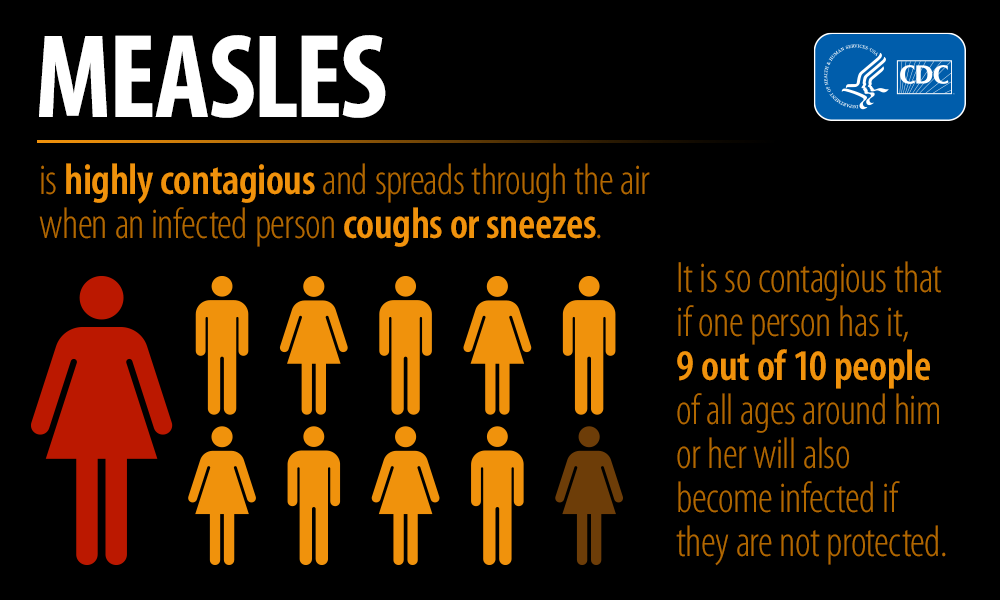
Image Source: CDC
People are contagious before they even have one of the most telling symptoms, a rash.
What are measles symptoms?
Measles begins with flu-like symptoms. The symptoms progress in stages. The first set of symptoms typically appear 7 to 14 days after contact with the virus. Symptoms include:
Red, watery eyes
Dry cough and runny nose
Rash
High fever
2-3 days after symptoms begin, tiny white spots called Koplik spots may appear. These white spots appear inside of the mouth.
Then the measles rash begins 3-5 days after symptoms begin. The measles rash starts on the face or in the hairline. It then spreads downwards into the neck, arms, chest, back, belly, and then legs. A person can spread measles 4 days before the rash appears to 4 days after it shows up.
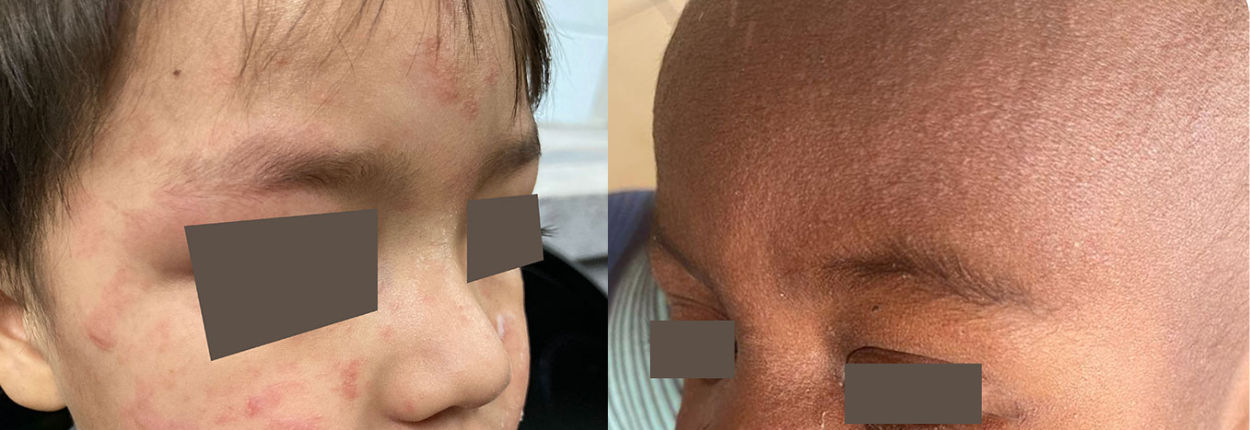
Image Source: CDC
It’s important to watch your symptoms for up to 21 days after being around someone with measles. 21 days is the longest time the virus can hide before you show any signs of sickness.
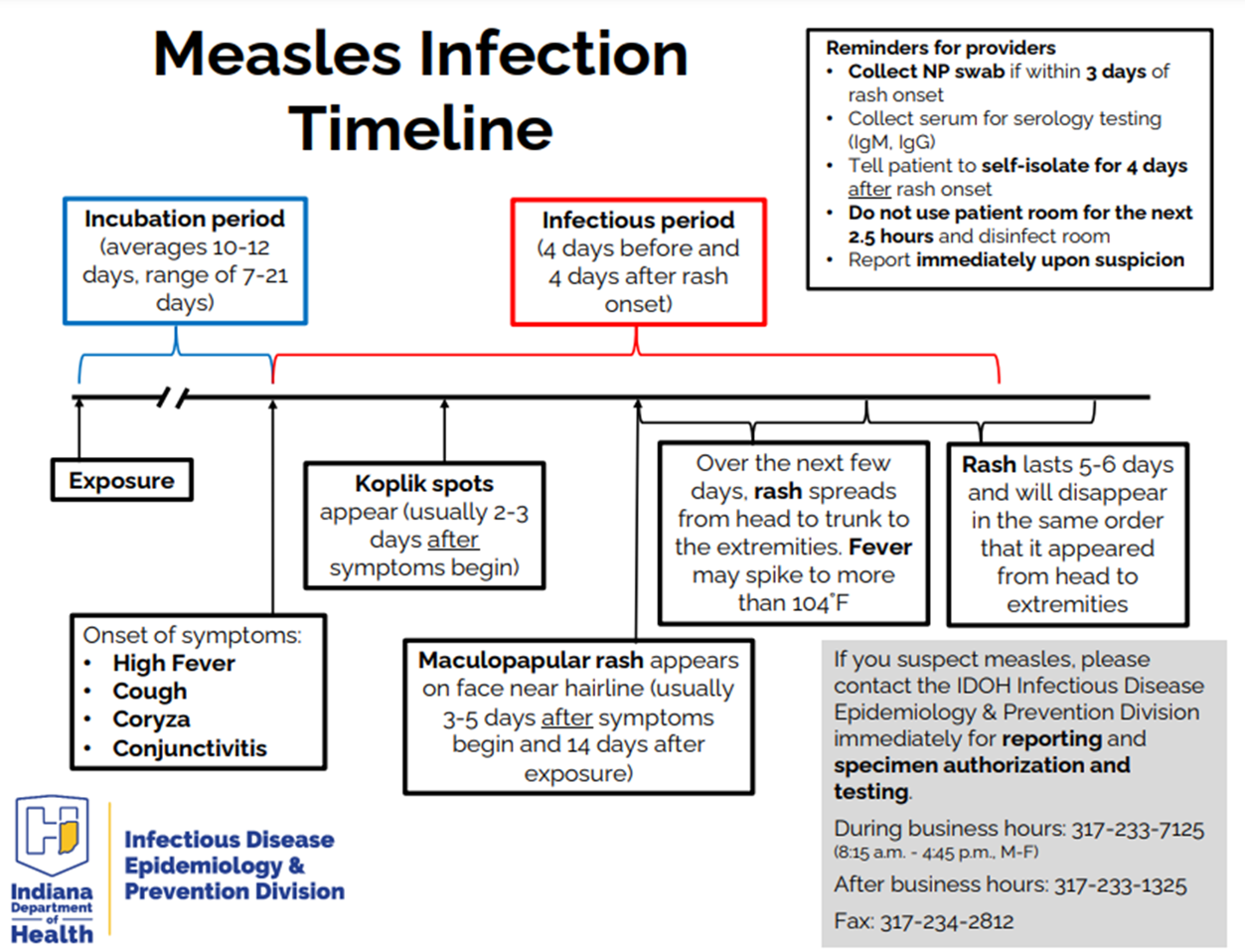
Image Source: Indiana Department of Health
How the measles vaccine protects you
The best way to protect against measles is with the measles, mumps, and rubella (MMR) vaccine. The MMR vaccine is available at Open Door.
Health experts recommend two doses of the MMR vaccine for all children.
• 1st dose: 12–15 months old
• 2nd dose: 4–6 years old
Children may get the measles, mumps, rubella, and varicella (MMRV) vaccine instead, which protects against chickenpox too. Healthcare professionals only give the MMRV vaccine to children ages 12 months through 12 years.
Infants aged 6-11 months can get a “zero dose” of MMR/MMRV. Zero dose is an extra dose that provides early protection. Zero dose doesn’t replace the standard two doses. If an infant gets a dose before their first birthday, they will still need to get two more doses on schedule.
Getting two doses of the MMR vaccine is 97% effective at preventing measles. Adults who are unsure of their protection from measles should check their vaccination records or talk to their healthcare provider.
MMR and MMRV can stop the spread of measles across borders. If you are a U.S. resident with plans to travel overseas, make sure you are up to date on your MMR or MMRV vaccines.
What to do if you’ve been around someone with measles
If you think you have measles or were around someone who has it, keep your distance from others, keep away from public or crowded places, and wear a mask if you must be around people.
Call your healthcare provider right away if you show any signs of measles before visiting a clinic or hospital. Many healthcare facilities, including Open Door, have special procedures and designated areas for people who may have measles.
Seek emergency medical care right away if you experience any of the following:
Difficulty breathing
Pain when breathing or coughing
Confusion
Extreme weakness
Severe dehydration
Blue-colored lips
Measles affects more than just children
Any person that has not received the vaccination is at risk of getting measles. Complications are more common in children younger than 5 years old and adults older than 20 years. Pregnant women and people with weakened immune systems are also more likely to experience problems caused by measles.
Measles can cause pneumonia or brain swelling. Other measles complications include:
Blindness
Ear infections
Severe diarrhea
Think you have measles? Open Door can help
If you think you may have measles, call Open Door at (765) 286-7000 and choose option 1 before going to any Open Door location. Calling ahead gives the care team time to prepare for your visit and helps protect other patients and staff.
Sources: Centers for Disease Control and Prevention (Measles: What to do if you get sick), Centers for Disease Control and Prevention (Measles Vaccination), Centers for Disease Control and Prevention (Measles in Older Adults), World Health Organization (Measles)