
As the days get shorter and temperatures drop, many people see changes in their energy, sleep, or mood. Most people brush off those changes as a normal part of winter. But when symptoms come back with the seasons and interfere with daily life, they may point to seasonal affective disorder (SAD). About 5% of adults in the United States experience SAD.
What is seasonal affective disorder (SAD)?
SAD, or seasonal depression, happens at certain times of the year. There are two types: fall-onset and spring-onset. This blog focuses on fall-onset, also known as winter depression.
SAD often starts during adulthood, often affecting more women than men. Most people aren’t even aware that they have it because symptoms can look like ordinary tiredness or a reaction to the gloomy weather leaving people to think that it’s simply the “winter blues” or winter fatigue.
What is the difference between winter fatigue and seasonal affective disorder?
SAD goes further than winter fatigue. Winter fatigue may leave you feeling less energetic when:
Days are short
Routines change
You spend less time outside
However, seasonal affective disorder includes:
Ongoing feelings of depression
A seasonal pattern
Trouble with work, relationships, and everyday life
It is important that you pay attention to how long these symptoms last. If feeling drained or unmotivated lasts for weeks, and returns in the same season, contact a health care professional.
What causes winter depression?
Researchers don’t know the exact cause of winter depression. However, experts think shorter daylight hours affect the body’s internal clock and brain chemicals involved in mood. Reduced sunlight can also affect vitamin D levels, which may change serotonin activity. People often call serotonin the “happy chemical” because it helps manage wellbeing, happiness, and emotional stability.
How can the holidays affect winter depression?
For some people, the holidays can make winter depression more challenging. The season is a happy time for some, but it can be painful for others. Holidays may bring memories of loss, difficult family relationships, traumatic experiences, or unmet expectations. These emotional stressors can add to the feelings of sadness, isolation, and low mood that often go with SAD.
What are common seasonal affective disorder symptoms?
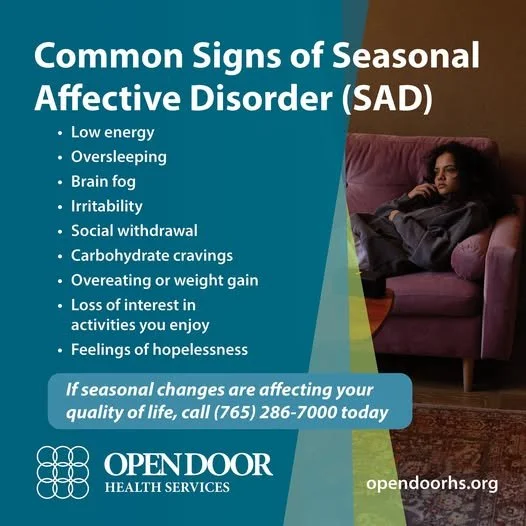
For winter depression, symptoms may include oversleeping, carbohydrate cravings, overeating or weight gain, low energy, and social withdrawal. People may also feel hopeless or lose interest in activities they typically enjoy. Symptoms typically last 4-5 months.
Katherine Mack, LMHC, a behavioral health counselor at Open Door shares more symptoms that she sees, “I also see irritability and brain fog in almost every patient with seasonal affective disorder. Those two symptoms come up in my work with patients again and again.”
A health care professional can diagnose SAD after reviewing a person’s health history and completing a mental health evaluation. A key sign is a pattern of depressive episodes occurring during a specific season for at least two consecutive years.
What is the difference between seasonal affective disorder and clinical depression?
SAD and clinical depression can involve several of the same symptoms, including low mood, hopelessness, low energy, and loss of interest. The defining difference is timing: SAD follows a recurring seasonal pattern.
That distinction does not make SAD less serious; both are treatable health conditions. A qualified professional can assess the full pattern of symptoms and recommend care.
How is winter depression treated?
You do not have to simply push through seasonal depression. Treatment may include:
Spending more time in natural sunlight
Light therapy
Psychotherapy, also known as talk therapy or counseling
Antidepressant medication
Keeping a regular sleep schedule
Connecting with supportive people
Daily meditation and/or stretching
A provider can help figure out which approach is right and explain how to use treatments safely.
Some people choose to attend counseling only during the winter months. Getting extra support when seasonal symptoms begin or become more difficult to manage is okay.
Hayden Blann, LMHC-A, a behavioral health counselor at Open Door, stresses the importance of movement. “10-15 minutes a day of stretching and gentle movement can help release the endorphins we want to feel. During the winter, our bodies are naturally in sleep mode, so we need to be more aware of what we do, so we don’t continue to feel so tired.”
Self-care can also support your mood. Make time for doing the things you enjoy for yourself. Even small things can add moments of comfort and purpose to your day.
Help is available
If seasonal changes are affecting your quality of life, please reach out. At Open Door, primary care and behavioral health services are available under one roof. You can schedule an appointment by calling (765)-286-7000.
If you or someone you know is experiencing a mental health crisis, call, or text 988 to reach the 988 Suicide & Crisis Lifeline. If there is immediate danger, call 911.
Sources: Johns Hopkins Medicine, National Institute of Mental Health, Mayo Clinic, Mental Health America