
Preventing colds and flu
Every year between October and May, people get more colds and flu than at other times of the year. Instances of Covid and RSV go up, too, with peak rates in December, January, and February.
Do these increases have to do with colder weather? Yes, indirectly, said Kate Anderson, RN, Open Door’s Director of Nursing. "Colds, flu, RSV, and Covid viruses travel easily through the air and on things we touch. When it’s colder outside, we are more likely to be inside, near other people and their germs. That's why people get sick more often during the fall and winter."
Although these are common happenings, there are ways we can help stop the spread. This blog gives tips on ways to prevent these common illnesses like the cold and flu.
What are cold, flu, RSV, and Covid symptoms?
Some of the common symptoms of the cold, flu, RSV, and Covid include cough, sneezing, and congestion. The illnesses have similar symptoms, but the cold, flu, and RSV are more seasonal.
It is important to know that people can be infected and show no symptoms.
The infographic below goes into detail on how to tell the difference between a common cold, flu, RSV, and Covid. You can view the information in both English and Spanish.
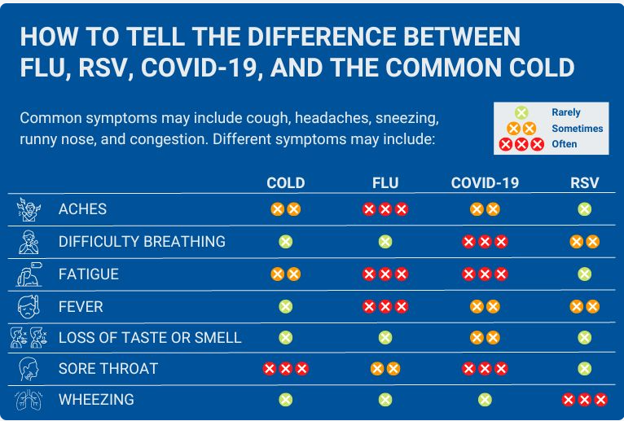
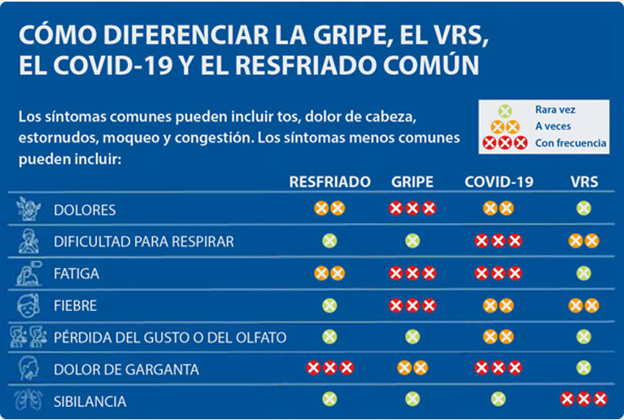
Image Source: National Foundation for Infectious Diseases
Does the cold, flu, RSV, or Covid respond to antibiotics?
Colds, flu, RSV, and Covid don’t respond to antibiotics. Viruses cause colds, flu, RSV, and Covid. Antibiotics work against living bacteria, not viruses.
"In most cases, symptoms last around 7-10 days. Staying hydrated, getting adequate rest, hand washing, and wearing a mask while treating symptoms and remaining fever-free will help,” said Anderson. "Healthcare providers can help recommend treatments for symptoms like coughs, sore throats, or fevers.”
When should I get the flu vaccine?
September or October is the ideal time to get a flu shot so that your body has time to build immunity before the peak in winter. “The very best strategy is to get your vaccines at the beginning of the season and stay clear of people who are sick," Anderson said. However, you can get the vaccine if the viruses are still circulating.
Routine flu shots prevented an estimated 10 million illnesses, 5 million medical visits, and 180,000 hospitalizations. If you do get sick from flu, the protection of the vaccine can make symptoms less severe and reduce risk of hospitalization and death.
Open Door now offers Flucelvax
Open Door is carrying Flucelvax this flu season. The Flucelvax is cell-based rather than egg based. This is important for those with an egg allergy concern. The FDA approves Flucelvax for people 6 months of age and older to prevent influenza.
Ways to Avoid Getting Sick
These simple practices can help you stay healthy during cold and flu season.
Get a flu vaccine. Most national health organizations agree – a flu vaccine is the best defense against the flu for adults and children older than 6 months. Flu vaccines are between 40-60% effective at preventing flu or serious symptoms. It takes a few weeks for the vaccine to create a full immune response, so don’t delay. Open Door has flu shot events for the community to get vaccinated.
Get an RSV vaccine if you’re pregnant, younger than 19 months, or older than 75. Adults aged 50-74 with an elevated risk also should be vaccinated. RSV causes cold-like symptoms but can be dangerous for the very young and the elderly.
Talk to your healthcare provider about getting a Covid vaccine. The Covid vaccine helps protect you from severe illness, hospitalization and even death. Talk to your healthcare provider about whether or not the Covid vaccine is recommended for you.
If you’re sick, stay away from others. The best way to keep your germs to yourself is to not be around others until you feel better. While you’re at home, get lots of rest and drink water. For the flu, you are generally contagious for 5 to 7 days after symptoms start with a fever.
Always cover coughs and sneezes with a tissue. Even if you’re pretty sure you’re not sick, use a tissue anyway. Coughs and sneezes can spread viruses up to 12 feet away! Be sure to throw it away and wash your hands, too.
Speaking of washing your hands, do it many times a day. Use soap and water and wash up to your wrists. Don’t forget between fingers and under fingernails.
Keep your hands away from your eyes, nose, and mouth. If you need to touch them, make sure to wash your hands first. Handwashing removes viruses, prevents self-infection, and protects others.
Blow your nose a lot. A runny nose is one way the body gets rid of viruses.
Wear a mask to prevent spreading a virus. If you have suspected flu or Covid, use a mask. Wearing a mask is recommended for an adult or child, who can, over the age of 3. Don’t forget the mask should cover both the nose and mouth securely.

When to Call Your Healthcare Provider
It’s important to get in touch with a healthcare provider right away if you have:
Fever higher than 104 degrees or that lasts longer than 4 days (and any fever in babies less than four months old)
Trouble breathing or swallowing
Blue lips or nails
A cough that causes choking or vomiting
Symptoms that don’t improve after 10 days
Any symptom that seems extra bad
If your healthcare provider is not available, seek care at an urgent care (like Open Door Urgent Care) or your local emergency department.
Open Door is Here for You
At Open Door, we believe everyone deserves access to healthcare. If you are uninsured or worried about costs, our sliding fee discounts are based on household size and income. No one is turned away for their inability to pay.
Call us at (765) 286-7000 to schedule an appointment or speak to one of our free Indiana Navigators for healthcare coverage help today.
Sources: American Academy of Pediatrics, National Institutes of Health, Nemours Kids Health, Centers for Disease Control and Prevention (Common Cold), Centers for Disease Control and Prevention (2024–2025 Influenza Season Summary), Centers for Disease Control and Prevention (Cell-Based Flu Vaccines), Seattle Children’s Hospital, National Foundation for Infectious Diseases