
Make colon screening a priority
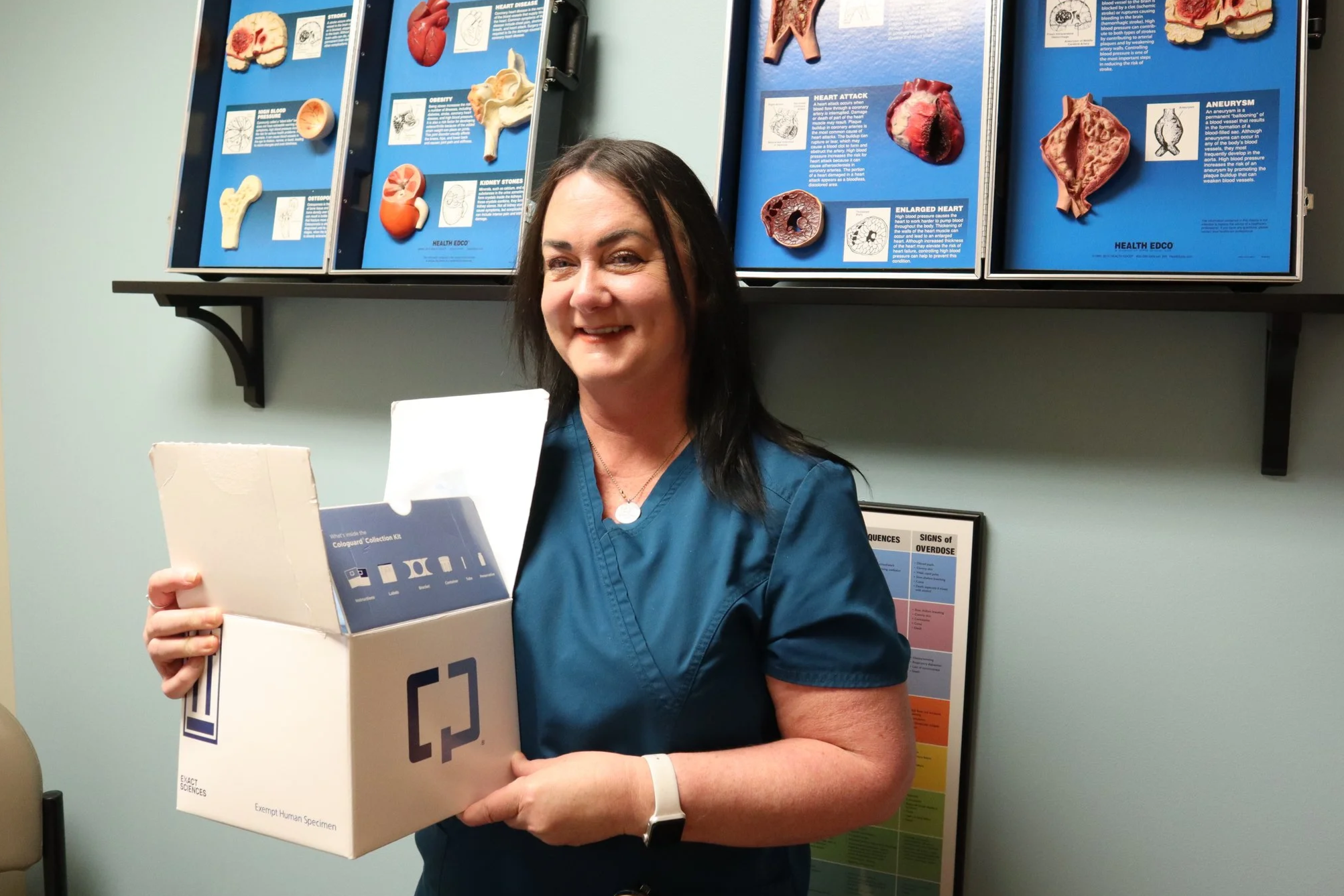
Sally Myers, Open Door Health Educator
According to the American Cancer Society, colorectal cancer is the third most diagnosed cancer in the U.S. Around 75% of people who get colon cancer have no family history, and rates are on the rise among 45-49 year olds. It is one of the most preventable and treatable cancers when detected early, yet it is still the second leading cause of cancer deaths. Why?
One reason might be the screening process itself, says Open Door’s health educator, Sally Myers. “A colonoscopy is the best way to find and prevent colon cancer, no question. But unlike getting blood work or a mammogram, the colonoscopy process takes at least two days and involves sedation. It requires taking time off work and finding someone to drive you to and from your appointment.”
Colonoscopies are absolutely worth the effort, especially if you have a history of colon cancer in your family. For people with no history of colon cancer, there are new and easier options for getting screened.
“At Open Door, we encourage all patients without a history of colon cancer to first use an at-home colon cancer test like Cologuard,” Sally said. “Just a few easy steps, and you’re done. It’s recommended that you do these tests every one to three years, depending on your results.”
As of 2022, Indiana Medicaid covers multiple at-home screening options, including Cologuard, fecal occult blood tests (gFOBT), and fecal immunochemical tests (FIT).
The bottom line? If you are between 45 and 75:
Talk with your healthcare provider about which colon screening option makes the most sense for you.
Check out YouTube shorts from the Colorectal Cancer Alliance for a look into the prep and procedure process.
Follow through with your screening – this is the most important step!
Put a reminder on your calendar about your next screening.
It may not be pleasant, but it is well worth it.
Sources: American Cancer Society, American Health Rankings, Centers for Disease Control and Prevention, and Colorectal Cancer Alliance